MOSS Energy Systems
Industrial steam, process heat, energy saving gasification, boiler and cogeneration systems. Contact us for info!.
MOSS Co - Energy Systems Division
Wood Gasifier Engine
Gasification is a century-old process using heat from a carbon rich green energy biomass to manufacture a synthesis gas (syngas), which is rich in hydrogen, carbon monoxide and methane. Syngas is formed by adding minimum amounts of air and/or steam to the waste material and raising combustion temperatures to approximately 1300° F (705° C) thus creating a chemical reaction. The syngas is cooled and the pollutants and impurities are then removed leaving a clean gas that can be sent to our gas powered engine and generating set thus converting that fuel into electricity. Our gasification process allows the usage of many types of waste fuels (see list below) that are no longer useful, but can be used for valuable fuel. The only exhaust to atmosphere from the biomass gasifier is one that is similar to a standard gas engine exhaust. The only by-product from the gasifier is a high-carbon bio-char that is periodically removed from the gasifier in small amounts (bio-char discharge can also be used as a soil enhancer or alternative fuel). By utilizing these waste fuels, disposal cost are eliminated, landfill space can be saved and electricity or other forms of energy are generated.
According to the U.S. Department of Energy (DOE), biomass recently surpassed hydropower as the largest domestic source of renewable energy and biomass consumption in electric utilities is expected to double every 10 years through 2030.
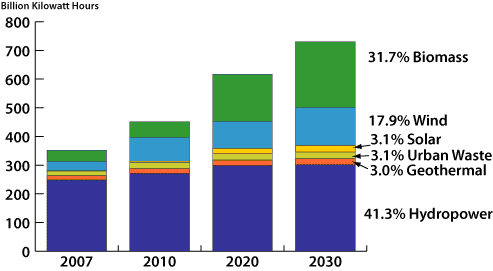
As the graph illustrates above, biomass is expected to remain the second-largest source of renewable electricity generation (behind hydropower) through 2030. Of all the renewable energy sources, biomass is the fastest growing, going from 11% of the total in 2007 to more than 31% in 2030. Under current federal regulations, woody biomass is considered carbon neutral and produces no more CO² than it would in its natural lifecycle.
Moss Gasifier Engine Fuels:
- Wood plant scrap
- Forestry residues
- Municipal tree limbs, brush, shrubs, etc.
- Dead or infested forest
- Waste wood from construction/demolition sites
- Sawmill waste
- Coconut husk or shells
- Bagasse
- Palm kernel shells
- Nut or rice husks
- Corn stover
- Oat husk
- Olive pits
- Pecan shells
- Wheat straw
- Peanut shells
The Moss gasifier engine system can provide a solution with projects ranging in size from 25 KW to 12 MWe.
Moss Biomass Gasifier Applications
Moss gasifier engine technology can be installed in a wide variety of industries or facilities nationwide including:
- Biomass processors: Sawmill, dry kiln, plywood, pellet plants, pulp and paper
- Industrial manufacturers: Chemical, refining, ethanol, food processing, packaging, rendering (any large manufacturing or processing plants)
- Data centers and communication hubs
- Institutions: Colleges and universities, hospitals, prisons, military bases, government buildings
- Municipal: District energy systems, landfills, K-12 schools, parks
- Waste and recycling companies
- Islands and remote locations